
The Unique HVAC Challenges of Aging Homes
Your home’s age plays a crucial role in determining its heating and cooling requirements. Houses built before the 1980s present distinct challenges that newer construction simply doesn’t face. At All Air Heating & Cooling, we understand that outdated insulation standards, original ductwork configurations, and evolving building materials create a complex environment for maintaining comfortable temperatures year-round. These older structures often feature single-pane windows, minimal wall insulation, and attic spaces that leak conditioned air like a sieve, making standard HVAC approaches ineffective and costly.
The construction methods of previous decades prioritized different concerns than energy efficiency. Many homes in Fredericksburg, VA and surrounding areas like Spotsylvania Courthouse and Falmouth were built when heating oil cost pennies per gallon and electricity rates were negligible. This means your vintage home likely has air gaps around windows, doors, and electrical outlets that create drafts and temperature inconsistencies. We regularly encounter homes where the original builders never anticipated modern cooling loads or the strain that Virginia’s humid summers would place on air conditioning systems that wouldn’t become standard for decades after construction.
Assessing Your Home’s Infrastructure Limitations
The infrastructure of older homes often cannot support modern HVAC equipment without significant modifications. Original electrical panels may lack the capacity for contemporary air conditioning units, while existing ductwork might be undersized, poorly sealed, or routed inefficiently through unconditioned spaces. To ensure your satisfaction, we start by asking questions about your home’s history, previous upgrades, and current comfort issues. This comprehensive approach helps us identify whether your 100-amp electrical service needs upgrading to 200 amps or if your narrow wall cavities can accommodate modern return air pathways.
Plaster walls, common in pre-1950s construction, present unique challenges for running new ductwork or refrigerant lines. Unlike modern drywall, plaster requires specialized techniques to penetrate without causing extensive damage. Additionally, many older homes feature radiator heating systems or gravity furnaces that lack any ductwork infrastructure, necessitating creative solutions for adding central air conditioning. Our experience serving Thornburg, Hartwood, and Brooke has shown us that each vintage home requires a customized approach based on its original construction methods and subsequent modifications over the decades.
Retrofit Solutions and Modern Adaptations
Successfully updating HVAC systems in older homes requires innovative retrofit solutions that respect the existing structure while delivering modern comfort and efficiency. Mini-split systems have revolutionized our approach to cooling historic homes, offering zone-based temperature control without extensive ductwork installation. These ductless systems require only small refrigerant line penetrations, preserving architectural integrity while providing efficient heating and cooling. Variable-speed equipment has become particularly valuable in older homes, as it can compensate for inconsistent insulation and air sealing by modulating output based on actual demand rather than cycling on and off at full capacity.
High-velocity HVAC systems represent another breakthrough for vintage properties. These systems use small, flexible ducts that can snake through existing wall cavities and between floor joists, delivering conditioned air through unobtrusive two-inch outlets rather than traditional large registers. This technology allows us to provide central air conditioning and heating repair services to homes that previously seemed impossible to retrofit. The small ductwork also reduces air leakage, a critical concern in older homes where every efficiency gain matters.
Strategic Efficiency Improvements
Improving HVAC efficiency in older homes extends beyond equipment selection to encompass comprehensive building performance enhancements. Key upgrade priorities include:
- Air sealing and insulation upgrades – focusing on attics, basements, and rim joists where heat loss is greatest
- Window treatments or replacements – storm windows can preserve historic character while improving thermal performance
- Strategic zoning implementation – creating separate temperature zones for different usage patterns and sun exposure
If we don’t provide quality air conditioning and heating repair and services, we’re not doing our job. It’s all part of our tradition of excellence so you know you are getting the best from HVAC professionals who care. This commitment means we evaluate each home holistically, considering how improvements in one area affect overall system performance. For instance, adding attic insulation might reduce cooling loads enough to downsize replacement equipment, saving thousands in upfront costs while reducing long-term operating expenses.
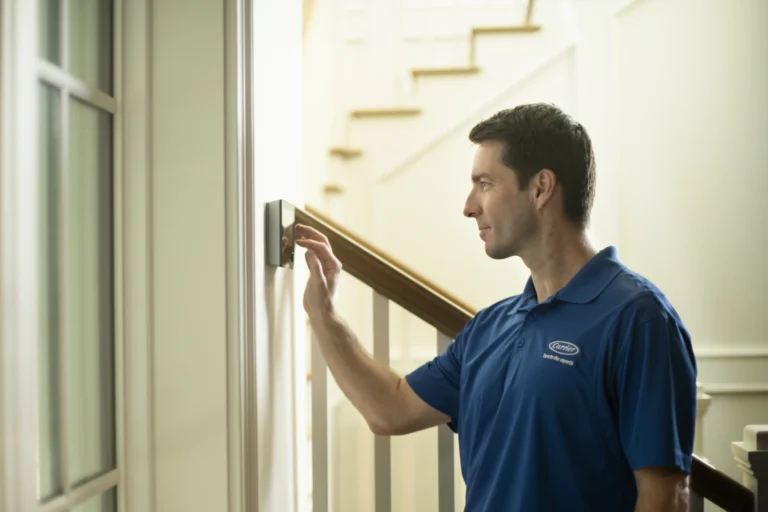
Smart thermostats have proven particularly effective in older homes, learning usage patterns and compensating for thermal mass differences in various construction materials. These devices can anticipate heating and cooling needs based on outdoor temperature trends, occupancy schedules, and even humidity levels, optimizing comfort while minimizing energy waste in structures that inherently leak more conditioned air than modern tight construction.
Understanding your older home’s specific HVAC needs ensures comfortable living while preserving its character and managing energy costs effectively. Each vintage property tells a unique story through its construction methods and subsequent modifications, requiring thoughtful analysis and creative solutions to achieve optimal indoor comfort throughout Virginia’s diverse seasons.